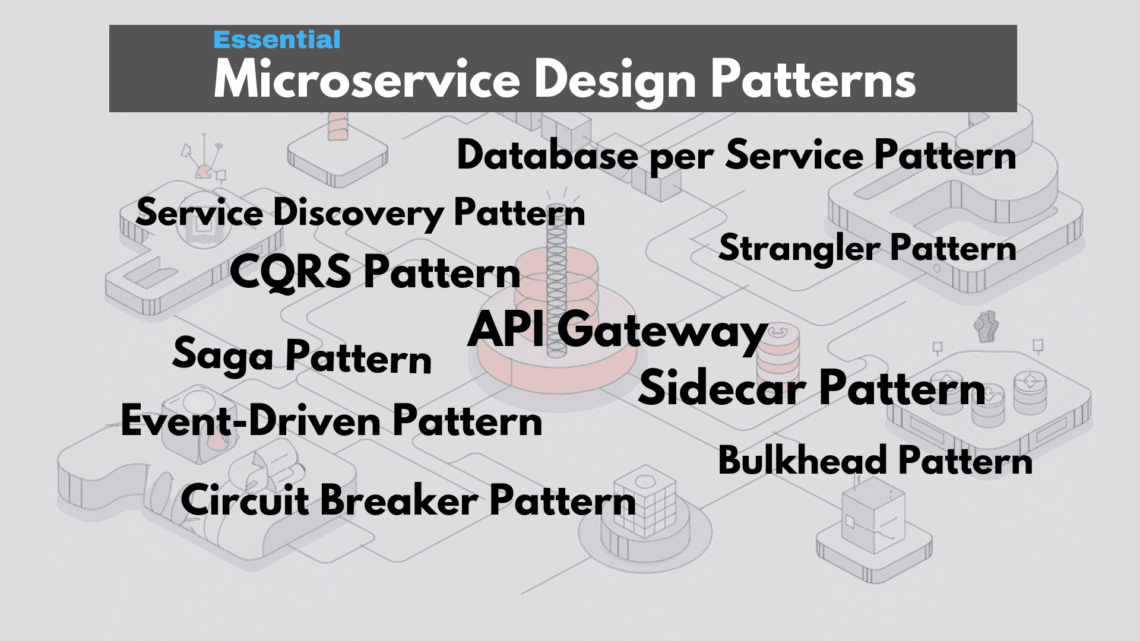
Microservices architecture is all about breaking down a large application into smaller, independent services that can communicate with each other. This approach helps in scalability, flexibility, and easier maintenance. However, designing microservices effectively requires certain patterns to manage communication, data, and failures efficiently. Here are some essential microservice design patterns…
-
-
Get Differences between Controlled component and Uncontrolled component
React is developed by Meta, formerly known as Facebook. It is a free and open-source front-end JavaScript library for building user interfaces based on UI components. A component is an independent, reusable bit of code which divides the UI into smaller pieces. In React applications, the html form element is…
-
Get Differences between React Component and React Element
React is developed by Meta, formerly known as Facebook. It is a free and open-source front-end JavaScript library for building user interfaces based on UI components. Components split the UI into independent, reusable pieces, and think about each piece in isolation. And, elements are the smallest building blocks of React…
-
ReactJS vs React Native: What is the difference?
ReactJS and React native, both are developed by Meta (formerly Facebook). It is a free and open-source front-end JavaScript library for building user interfaces based on UI components. Underline, both are using React Library to build the application, while they share similarities, there are distinct differences between ReactJS and React…
-
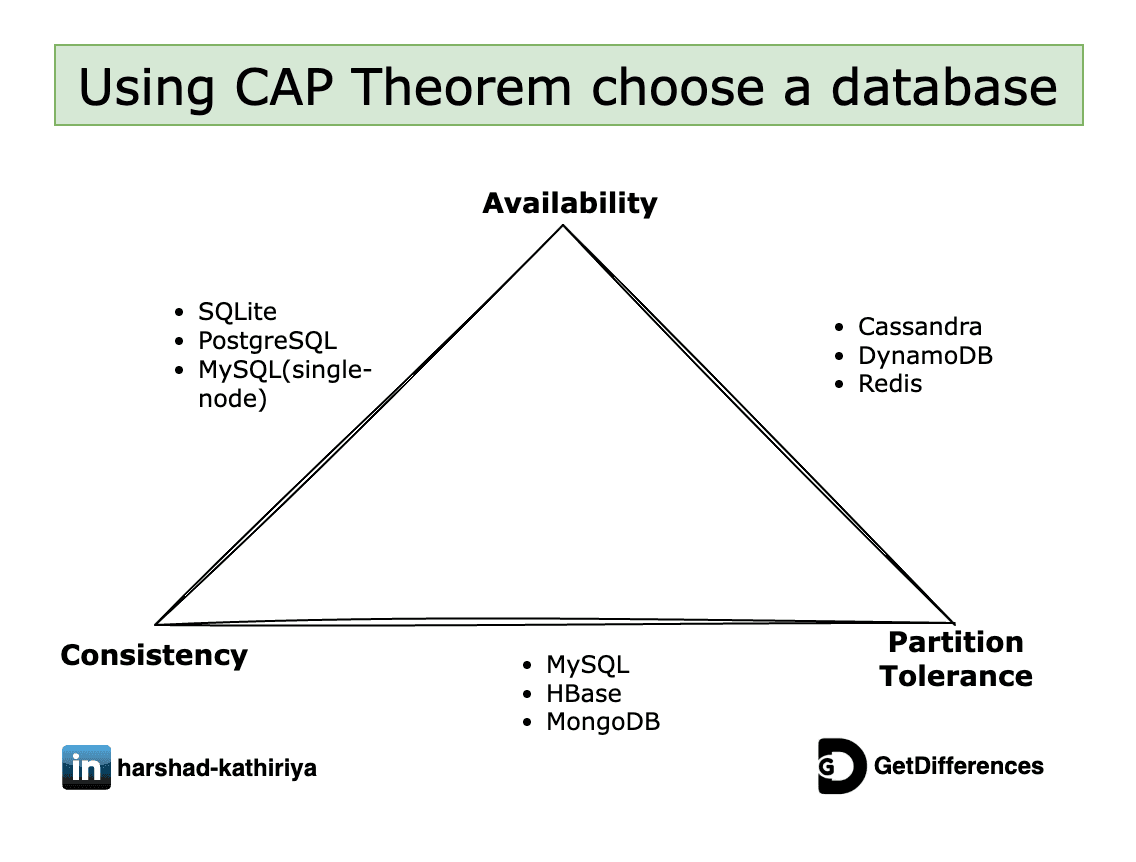
Using CAP Theorem choose a database.
When building a large-scale distributed system, choosing the right database is crucial for meeting both user expectations and business requirements. The CAP Theorem offers valuable insights into the trade-offs involved in selecting a database, especially when it comes to consistency, availability, and partition tolerance. The CAP Theorem states that a…
-
Get Differences between Machine Learning and Deep Learning
Artificial intelligence is used to classify machines that mimic human intelligence and human cognitive functions like problem-solving and learning. AI uses predictions and automation to optimize and solve complex tasks that humans have historically done, such as facial and speech recognition, decision making and translation. Machine learning is a subset…
-
Get Differences between Retry Pattern and Circuit Breaker Pattern
In a distributed environment, resilience and fault tolerance are important. Two essential techniques, the Retry Pattern and the Circuit Breaker Pattern, stand out as pillars in the search for robustness. Both patterns appear to address identical issues like improving system reliability by gracefully accepting temporary errors. But when you dive…
-
Data Structures vs Algorithms: Key Differences
Data Structures vs Algorithms are two fundamental concepts in computer science that are closely related but serve different purposes. Exploring Data Structures vs Algorithms By understanding Data Structures vs Algorithms, developers can make informed choices that enhance their coding practices. A data structure is a specialized format for organizing, processing,…
-
Get Differences between NumPy and Pandas
Python is an interpreted, object-oriented, high-level programming language with dynamic semantics. Nowadays, Python is a programming language widely used by Data Scientists. Python has in-built mathematical libraries and functions, making it easier to calculate mathematical problems and to perform data analysis. NumPy and Pandas are two most popular libraries in…