
Introduction: Understanding the AI Revolution We Are Living In
Artificial Intelligence is no longer an experimental technology hidden inside research labs. It has become part of everyday digital life—quietly powering search engines, recommendation systems, voice assistants, customer support chats, image generators, video tools, and even software development workflows.
What makes today’s AI different from earlier generations is scale and capability. Modern AI models don’t just follow rules; they understand context, generate original content, reason across different types of information, and assist humans in solving complex problems.
Yet, for many people, the AI ecosystem still feels overwhelming.
There are hundreds of AI tools, dozens of competing models, and new names appearing almost every month. Some models specialize in text, others in audio or images, and newer ones can handle everything at once.
This guide is written to cut through that confusion.
In this blog, we will cover:
- What Artificial Intelligence really means
- What an AI model is and how it works
- Major categories of AI models
- A detailed list of widely used AI models and platforms
- Real-world use cases across industries
- How to think about choosing the right AI model
Whether you are a developer, a founder, a student, or simply curious about modern technology, this guide will give you a clear and practical understanding of the AI landscape.
What Is Artificial Intelligence (AI)?
Artificial Intelligence (AI) refers to computer systems designed to perform tasks that typically require human intelligence. These tasks include understanding language, recognizing images and speech, learning from experience, making decisions, and creating content.
Unlike traditional software, which follows fixed instructions written by developers, AI systems learn from data. The more data they process, the better they become at recognizing patterns and producing accurate outputs.
Core Technologies Behind AI
Modern AI systems are built using a combination of technologies:
- Machine Learning (ML): Algorithms that learn patterns from data
- Deep Learning: Neural networks with many layers that model complex relationships
- Natural Language Processing (NLP): Enables machines to understand and generate human language
- Computer Vision: Allows machines to interpret images and videos
- Speech Processing: Enables voice recognition and speech generation
Together, these technologies form the foundation of today’s AI-powered applications.
What Is an AI Model?
An AI model is a trained system that has learned patterns from data and can apply that knowledge to new inputs.
For example:
- A language model learns how sentences, ideas, and meanings connect
- An image model learns how shapes, colors, and objects appear
- An audio model learns how speech and sound patterns work
Once trained, a model can:
- Generate new text, images, or audio
- Classify and analyze data
- Answer questions
- Make predictions
Foundation Models
Most modern AI systems are built on foundation models. These are very large, general-purpose models trained on massive datasets. Instead of being designed for just one task, they can be adapted for many different use cases through prompts or fine-tuning.
Foundation models are the reason one AI tool can write an article, explain code, summarize documents, and answer questions—all using the same underlying model.
How the Modern AI Ecosystem Is Organized
The AI ecosystem can be broadly divided into three layers:
- AI Models – The intelligence layer
- AI Platforms & Websites – Where models are hosted and accessed
- AI Applications – End-user tools built on top of models
This blog focuses mainly on models and platforms, because they are the building blocks that power everything else.
Major Categories of AI Models
1. Text-Based AI Models (Large Language Models)
What Are Large Language Models?
Large Language Models (LLMs) are AI systems trained on enormous amounts of text data. They understand grammar, context, tone, and intent, allowing them to generate human-like responses.
These models are the backbone of:
- Chatbots
- Writing assistants
- Coding helpers
- AI agents
Popular and Actively Used Text Models
OpenAI
- GPT-4
- GPT-4o (multimodal, real-time)
- GPT-5
- GPT-5.1
- GPT-5.2
These models are known for strong reasoning, instruction following, and broad general intelligence.
Google (Gemini Family)
- Gemini 1.5 Pro
- Gemini 1.5 Flash
- Gemini Nano (on-device)
- Gemini 2.0 (agent-focused, advanced reasoning)
Gemini models are deeply integrated into Google products and are designed for large context handling and multimodal workflows.
Anthropic
- Claude 3 Haiku
- Claude 3 Sonnet
- Claude 3 Opus
- Claude 3.5
Claude models are widely used for long-document analysis, research, and compliance-heavy workflows.
Meta (Facebook)
- LLaMA 2
- LLaMA 3
- LLaMA 3.1
- Code LLaMA
These open-source models are popular for self-hosted and enterprise-controlled AI deployments.
Other Important Language Models
- Mistral Large
- Mixtral 8x7B
- Mixtral 8x22B
- Cohere Command
- Qwen (Alibaba)
- Falcon (TII)
- Grok (xAI)
- DeepSeek
Common Use Cases for Text Models
- Blog and content writing
- Customer support automation
- AI-powered search
- Legal and financial document analysis
- Programming assistance
- Research and summarization
2. Audio AI Models (Speech and Sound)
Audio AI focuses on understanding and generating human speech and sound. This category has grown rapidly with the rise of podcasts, audiobooks, and voice-first interfaces.
Speech-to-Text (Automatic Speech Recognition)
These models convert spoken language into text.
Popular models and platforms:
- OpenAI Whisper
- Meta SeamlessM4T
- Google Speech-to-Text
- Amazon Transcribe
- Microsoft Azure Speech
- Vosk (open source)
Use cases:
- Meeting transcription
- Video subtitles
- Voice search
- Call center analytics
Text-to-Speech (TTS)
Text-to-Speech models convert written text into natural-sounding voices.
Popular platforms:
- ElevenLabs
- Google WaveNet
- Amazon Polly
- Azure Neural Voices
- Murf AI
- WellSaid Labs
- Coqui TTS
Use cases:
- Audiobooks
- Podcasts
- E-learning
- Accessibility tools
Voice Cloning and Emotional Voice AI
These models can replicate or design unique voices with emotion and personality.
Platforms:
- ElevenLabs Voice Cloning
- Hume EVI
- Resemble AI
- Play.ht
Music and Sound Generation
Popular music AI tools:
- Suno
- Stable Audio
- MusicFX
- Riffusion
- AIVA
Use cases:
- Background music
- Game soundtracks
- Content creation
3. Image Generation and Computer Vision Models
Image Generation Models
These models generate images from text prompts or edit existing images.
Popular models and tools:
- DALL·E 3
- Stable Diffusion
- Stable Diffusion XL
- Midjourney
- Leonardo AI
- Adobe Firefly
- Google Imagen
Use cases:
- Marketing creatives
- Product mockups
- Social media visuals
- Concept art
Computer Vision Models
These models analyze and understand images and videos.
Widely used models:
- YOLO (v5, v8)
- OpenCV
- Detectron2
- Segment Anything (SAM)
- CLIP
Use cases:
- Medical imaging
- Facial recognition
- Autonomous systems
- Surveillance and security
4. Video Generation and Video AI
Video AI enables the creation and understanding of video content.
Popular platforms:
- OpenAI Sora
- Google Veo
- Runway Gen-3
- Pika
- Synthesia
- HeyGen
- Meta Make-A-Video
Use cases:
- Marketing videos
- Training content
- Animated storytelling
- Social media videos
5. Multimodal AI Models
Multimodal models can understand and generate text, images, audio, and video together.
Leading multimodal models:
- GPT-4o
- GPT-5.x
- Gemini 2.0
- Claude 3.5
- Meta ImageBind
- Microsoft Kosmos
These models are critical for AI agents and complex workflows.
6. Embedding Models and Vector AI
Embedding models convert content into numerical vectors that represent meaning.
They power:
- Semantic search
- Recommendation systems
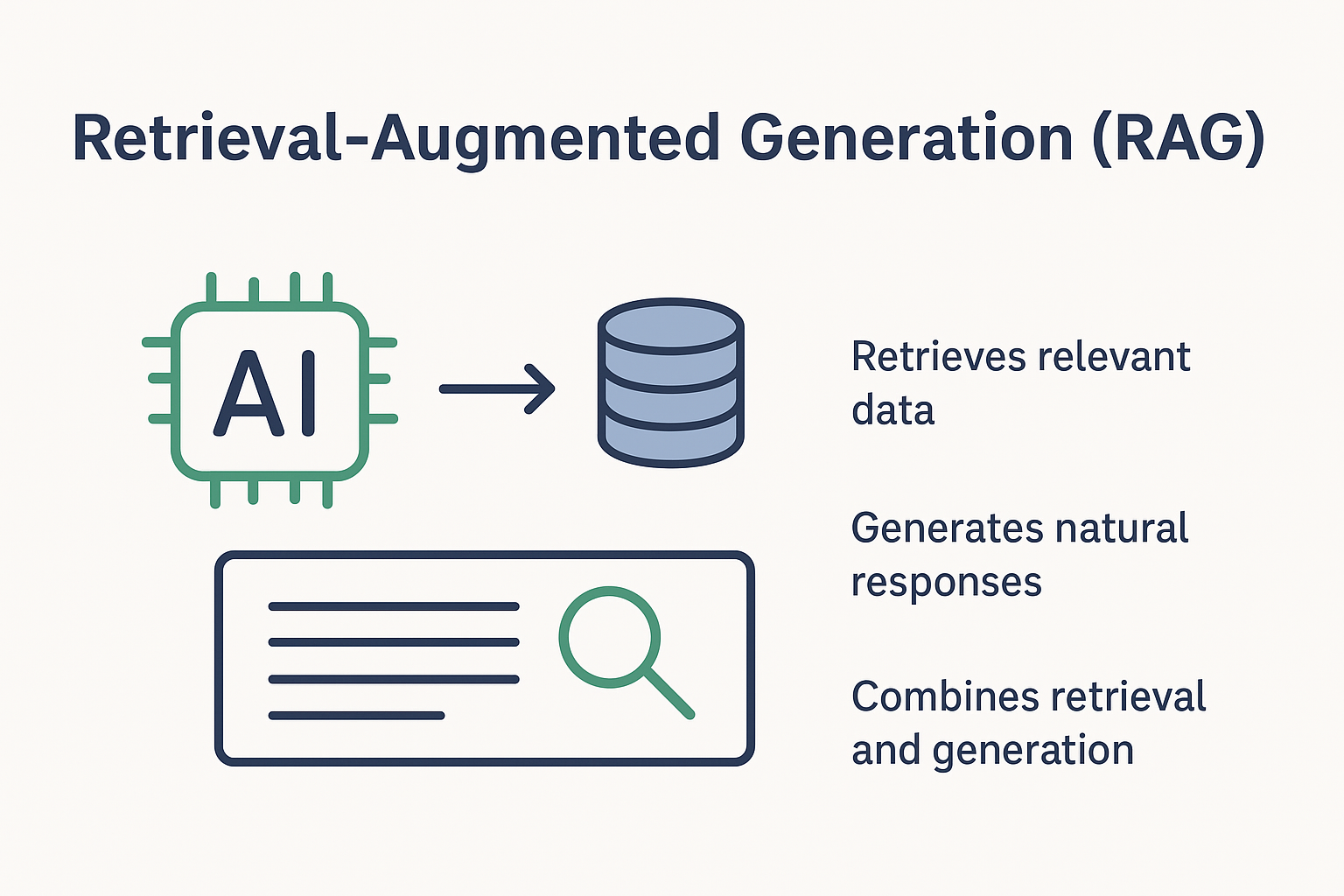
- Retrieval-Augmented Generation (RAG)
Popular embedding models:
- OpenAI text-embedding-3
- Cohere Embed
- Sentence-BERT
- MiniLM
- Instructor
Vector databases:
- Pinecone
- Weaviate
- Milvus
- Qdrant
- FAISS
- ChromaDB
7. Code-Focused AI Models
These models are trained specifically on programming languages.
Popular code models:
- GitHub Copilot
- OpenAI Codex
- Amazon CodeWhisperer
- Google Codey
- Code LLaMA
- DeepSeek Coder
- StarCoder
Use cases:
- Code generation
- Debugging
- Refactoring
- Documentation
8. AI Model Platforms and Websites
These platforms host, distribute, and manage AI models.
- Hugging Face
- OpenAI Platform
- Google Vertex AI
- AWS Bedrock
- Azure AI Studio
- Replicate
- Together AI
- Ollama (local models)
- Kaggle Models
They allow users to experiment, deploy, and scale AI solutions.
🔗 Official AI Websites & Platforms (Where to Explore and Use AI)
To make this guide more practical, here is a curated list of official and widely used AI websites where you can explore models, APIs, tools, and documentation. These platforms power most real-world AI applications today.
🔹 OpenAI
Website: https://openai.com
Platform: https://platform.openai.com
OpenAI provides some of the most advanced large language and multimodal models, including GPT-4o and GPT-5.x. Developers use OpenAI APIs for chatbots, content generation, code assistance, embeddings, image generation, and voice applications.
Best for:
Text generation, multimodal AI, agents, embeddings, enterprise AI solutions
🔹 Google AI / Google DeepMind
Website: https://ai.google
Platform: https://cloud.google.com/vertex-ai
Google’s AI ecosystem is centered around the Gemini family of models. Vertex AI allows developers and enterprises to build, deploy, and scale AI models with strong integration into Google Cloud services.
Best for:
Multimodal AI, long-context processing, enterprise workflows, AI agents
🔹 Anthropic
Website: https://www.anthropic.com
Platform: https://console.anthropic.com
Anthropic develops the Claude family of models, known for strong reasoning, safety, and long-document understanding. Claude is widely used in research, legal, and compliance-heavy environments.
Best for:
Document analysis, reasoning, safe AI applications
🔹 Meta AI (LLaMA)
Website: https://ai.meta.com
Models: https://ai.meta.com/llama
Meta’s LLaMA models are open-source and widely adopted for self-hosted AI, fine-tuning, and research. They are popular among developers who want full control over deployment.
Best for:
Open-source AI, on-premise deployment, research, customization
🔹 Mistral AI
Website: https://mistral.ai
Mistral focuses on efficient, high-performance models like Mixtral and Mistral Large. It is especially popular in Europe and for cost-optimized AI solutions.
Best for:
Efficient AI systems, enterprise use, open and proprietary models
🔹 Microsoft Azure AI
Website: https://azure.microsoft.com/ai
Azure AI provides access to OpenAI models along with Microsoft’s own AI services, including vision, speech, and search APIs, all tightly integrated with enterprise infrastructure.
Best for:
Enterprise AI, cloud-native AI apps, business automation
🔹 Amazon AWS Bedrock
Website: https://aws.amazon.com/bedrock
AWS Bedrock offers managed access to multiple foundation models from different providers, making it easier to experiment and deploy AI at scale.
Best for:
Scalable AI, cloud integration, multi-model access
🔹 Hugging Face
Website: https://huggingface.co
Hugging Face is the largest hub for open-source AI models, datasets, and demos. It is a go-to platform for experimentation, learning, and community-driven AI development.
Best for:
Model exploration, fine-tuning, open-source AI
🔹 Ollama
Website: https://ollama.com
Ollama allows developers to run modern AI models locally on their machines, making it ideal for privacy-focused and offline AI workflows.
Best for:
Local AI, experimentation, private development
🔹 Image & Creative AI Platforms
- Midjourney: https://www.midjourney.com
- Adobe Firefly: https://www.adobe.com/firefly
- Stability AI: https://stability.ai
Best for:
Image generation, design, creative workflows
🔹 Video AI Platforms
- Runway: https://runwayml.com
- Pika: https://pika.art
- HeyGen: https://www.heygen.com
Best for:
AI video generation, avatars, content creation
🔹 Audio & Voice AI Platforms
- ElevenLabs: https://elevenlabs.io
- OpenAI Whisper: https://openai.com/research/whisper
- Suno: https://suno.ai
Best for:
Speech-to-text, voice synthesis, music generation
How to Choose the Right AI Model
When selecting an AI model, consider:
- Input type (text, image, audio, video)
- Accuracy and reliability
- Cost and scalability
- Data privacy requirements
- Open-source vs managed services
There is no single “best” AI model—only the best model for your specific problem.
Ethical and Practical Considerations
- Bias in training data
- Hallucinated or incorrect outputs
- Copyright and licensing concerns
- Voice and image consent
- Data security and privacy
- Human oversight
Responsible AI usage is essential as models grow more powerful.
Conclusion
Artificial Intelligence has become a foundational technology shaping the future of software, content, and digital experiences. From text and audio to images, video, and multimodal intelligence, modern AI models are capable of solving problems that once required entire teams.
Understanding AI models, their categories, and where to access them is no longer optional—it is a critical skill in today’s tech-driven world.
As AI continues to evolve, those who learn how to use it wisely will gain a powerful advantage in creativity, productivity, and innovation.